25 Years Ago, $399 Bought 1,000 Songs: The iPod's Market Entry
Two and a half decades ago, a $399 price tag and 5GB of storage defined a new portable media standard that reshaped consumer electronics.
By Arjun Patel ·
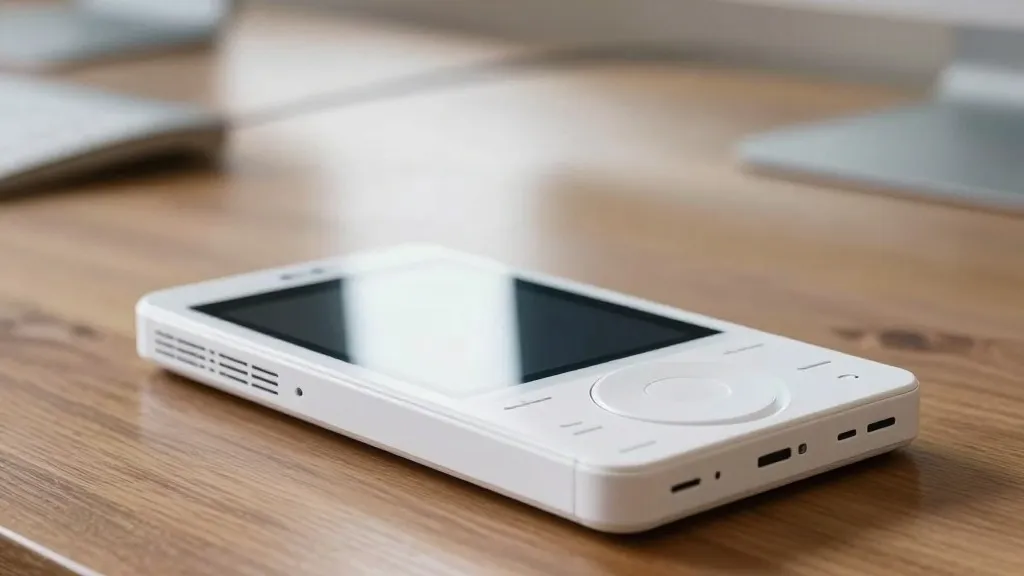
For California residents and tech consumers generally, the 25th anniversary of the original Apple iPod marks the moment when a $399 price tag became synonymous with digital convenience. On October 23, 2001, the device entered the market with a specific proposition: it could hold 1,000 songs in a package roughly the size of a standard deck of cards. At a time when portable media was still fragmented and clunky, this combination of capacity, form factor, and price established a new baseline for what consumers expected from personal entertainment devices.
The launch occurred against a backdrop of significant corporate recovery for Apple. By late 2001, CEO Steve Jobs had already guided the company out of the post-dot-com slump with the success of the iMac and iBook lines. Jobs had previously articulated a vision where the Mac would serve as the central hub for a user’s digital lifestyle, connecting various peripherals. The iPod was the logical extension of this strategy, targeting a massive market for music consumption that, while populated by competitors like Sony, Creative, and Sonic Blue, lacked a definitive leader. Jobs argued that existing players had not yet found the correct formula for digital music distribution.
The hardware specifications were central to the device’s initial appeal. The player utilized a 1.8-inch hard drive, supplied by Toshiba, with a thickness of just 0.2 inches. This component allowed the final device to measure 2.4 by 4 by 0.78 inches and weigh 6.5 ounces, a weight Jobs noted was lighter than most contemporary cell phones. The 5GB storage capacity was marketed specifically as the ability to store 1,000 MP3 files at 160Kbps, a quantity he described as representing the entire music library for the average user. The device supported CD-quality sound and played MP3, WAV, and AIFF formats.
Connectivity was a key differentiator in the competitive landscape. The original iPod featured FireWire 400, a connection that was significantly faster than the USB standards prevalent at the time. During the unveiling, Jobs claimed that transferring a single CD’s worth of data to the iPod took five to 10 seconds, whereas USB connections required approximately five minutes. For a full transfer of 1,000 songs, the estimated time was 10 minutes compared to five hours on USB-based competitors. This speed was enabled by the Auto-Sync feature, which worked in tandem with the simultaneous launch of iTunes 2, allowing users to maintain curated libraries on their Macs that automatically synced with the portable device.
The user interface and design philosophy also played a critical role in the product’s adoption. The device featured a minimalist aesthetic with a single-hand operation scheme centered around a scroll wheel equipped with a piezoelectric clicker for tactile feedback. This allowed for rapid navigation by playlist, artist, or song. The device also included 20-minute skip protection and a rechargeable lithium-polymer battery that provided 10 hours of continuous playback. Apple stated that an empty battery could be recharged to 80% in one hour.
Reactions to the launch focused on the integration of hardware and software. The simultaneous release of iTunes 2, which included MP3 CD burning capabilities, reinforced the ecosystem approach. The iPod also functioned as a FireWire hard disk drive, adding utility beyond music playback. The first song demonstrated during the presentation was 'Building a Mystery' by Sarah MacLachlan, highlighting the device's immediate usability.
The market impact of the original iPod was substantial, though its dominance would eventually face new challenges. The device set the stage for the broader smartphone revolution, with the first iPhone arriving over five years later in early 2007. For more than a decade, the iPod and iPhone coexisted in Apple’s product lineup. However, the iPod’s market share gradually declined as smartphones matured, leading to the release of the final model, the 7th-generation iPod Touch, in May 2019. Although the product line was left unmaintained for a period, it was officially discontinued in May 2022, bringing a formal close to a 21-year product run.
Looking forward, the legacy of the original iPod remains a benchmark in the history of consumer electronics. Its success demonstrated the value of integrating hardware, software, and distribution channels into a cohesive package. For businesses and investors, the anniversary serves as a reminder of how specific innovations in storage density and data transfer speeds can create new market categories. The $399 price point and 5GB capacity of 2001 may seem modest by today's standards, but they were sufficient to shift consumer expectations and establish a dominant brand in the portable media space.
Source: Tom's Hardware