Wolf Packs Invade Finnish Villages as Google’s AI Buildout Turns Forests to Mud
Displaced wildlife is entering residential areas near Muhos and Otanmäki after regulators ordered Google to halt unauthorized construction for its new data centers.
By Mykola Bondarenko ·
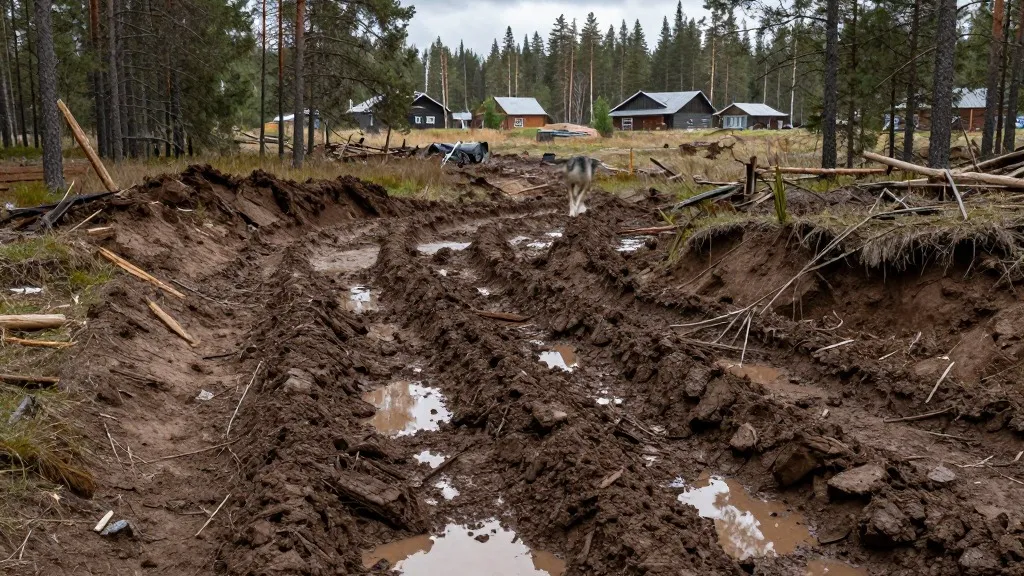
Wolves are now roaming into the streets of quiet Finnish villages, a direct consequence of massive forest clearances that have displaced local wildlife. Residents report that the animals, seeking new territory after their habitats were destroyed, are appearing in neighboring communities. This development marks a tangible, albeit alarming, escalation in the conflict between tech infrastructure expansion and local ecology in the region.
The presence of wolves in residential areas has raised significant safety concerns for families in Otanmäki and surrounding villages. Anni Ranta, a 53-year-old resident whose family has lived in the area for generations, explained that the wild animals moved out of the forest because their natural homes were gone. "We had wolves coming into the village because all the wild animals moved out of the forest," Ranta stated. Beyond the immediate wildlife issue, Ranta also expressed fear that the U.S.-owned data centers could make Finland a more attractive target for Russian aggression.
These reports come on the heels of a formal apology from Google’s Finland country manager regarding unauthorized clearings near the village of Muhos. The company admitted that the work has transformed 816 acres of forest into a muddy expanse. Additionally, regulators have ordered Google to cease work on another roughly 500 acres of cleared forest located 55 miles southeast of Otanmäki. The Finnish Licensing and Supervision Authority (LVV) issued these stop-work orders earlier this month, citing violations in both Muhos and the nearby area of Kajaani.
Local anger is not limited to environmental groups; residents are increasingly vocal about the disruption to their daily lives. Complaints include persistent construction and factory noise, streams turning brown from runoff, and the displacement of rare bird species. This pattern mirrors concerns raised in other countries where AI data centers have been built, but the scale of the impact in Finland has drawn particular scrutiny.
A representative from the Finnish Association for Nature Conservation (SLL) told The Guardian that Google’s disregard for environmental policy has been unprecedented and clear. The regulatory body’s intervention underscores the severity of the situation, as the LVV moved to enforce compliance after identifying the unauthorized nature of the land clearance. Despite the regulatory pushback, Google maintains a cooperative stance.
A Google spokesperson issued a statement expressing confidence in their process, saying, "We will fully comply with LVV’s requests in this matter." The spokesperson added that the company looks forward to maintaining an active and open dialogue with authorities to strengthen its partnership with Finland and local organizations. The company appears to be betting that the long-term business benefits of the data centers will help sway regulators and the government in its favor.
The situation leaves several open questions regarding the future of the project and the recovery of the affected land. While Google has agreed to comply with the stop-work orders, the extent of remediation and the timeline for restoring the 1,300-plus acres of cleared forest remain unclear. For now, the muddy wastelands stand as a stark reminder of the environmental costs associated with the rapid buildout of AI infrastructure.
Source: Tom's Hardware